

How Does The Heat Work On A 1963 Corvair Youtube
Perrya knows a off-white amount most the Corvair, America's aluminum-engine classic car.
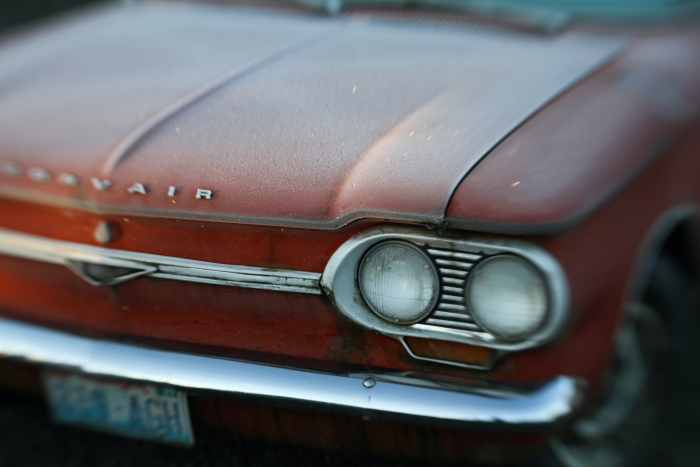
Watch out for Chevrolet Corvair engine problems
Jean Kercheval on Unsplash
Corvair Powerglide Transmission
The Corvair Powerglide automatic transmission remains i of the about stable and resilient transmissions Chevrolet made. Amazingly, the Corvair'southward air-cooled engine seldom overheats or goes in a higher place 400ºF.
Withal, after a auto has been idle for many years, problems commonly develop with the automated manual and the engine overheating.
The following troubleshooting techniques employ to all models from 1960-1969.
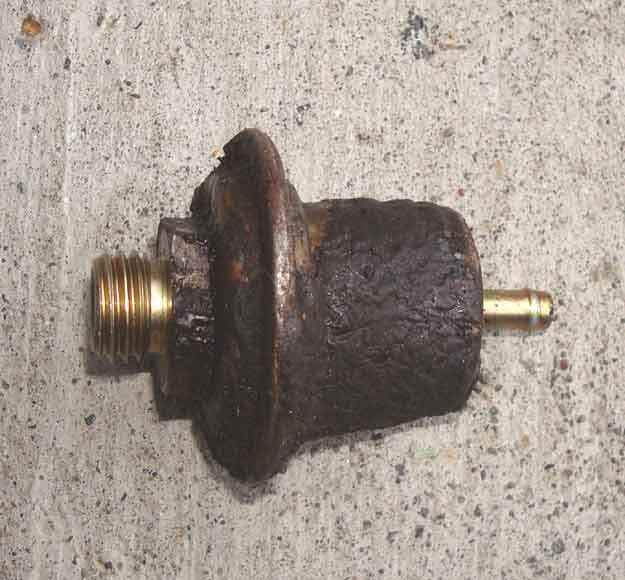
Powerglide transmission: the modulator
Modulator
The modulator, should it fail, can crusade bug with shifting, and if the minor prophylactic connector tube is clogged, it can contribute to idle problems. The device contains a diaphragm and valve. If your engine is hot and you cannot make up one's mind checking the Powerglide (PG) fluid level when the engine is running (it reads "empty" on stick), the modulator may be the result, as information technology is allowing the fluid to leak out of where it is supposed to be. Loss of tranny fluid where you cannot locate a leak may betoken a ruptured diaphragm. A ruptured diaphragm allows the oil to be drawn into the intake manifold causing excessive white fume. If in that location is no smoke, cheque the rear beam lubricant every bit tranny oil tin can enter if the pinion shaft seal is worn or bad.
Test the Modulator Before Removing Information technology
Attach a vacuum gauge to the lower terminate of the modulator hose and start the engine. At idle speed, the guess should read within one inch. If information technology doesn't, something is blocking the tube. Open up the throttle; there should be a quick drib in vacuum. If there is none, or the drop is delayed, the restriction is internal inside the vacuum line somewhere.
If both readings are OK, the oil pressure level at idle with fluid level full and engine hot and modulator hose connected and the transmission in Neutral/Drive should be 47-57 psi.
If in that location is no oil pressure level, at that place is a broken forepart pump drive shaft, or shaft is disengaged from the front pump drive hub. If there is low oil pressure, it may be caused by a dislodged plug from the forepart of the hollow front pump drive shaft.
Removing the Modulator
The modulator is a 2-3" diameter mushroom-shaped vacuum affair that tin can exist installed in less than 30 minutes (with the correct tools) in the side of the automatic transmission. Access is hard so jack upwards the car and remove the rear right tire. It is located in a recessed expanse and using the special tool from Clark's Corvair makes it easy.
- Odds are nothing has ever been done to this function, and then spray some lubricant to loosen it before starting to remove it.
- Remove the short safety tube and verify it is not clogged.
- Verify that the tubing attached to the rubber tube remains solid with no holes.
- Torque information technology a couple times and remove it.
- There is a minor valve in the hole. If it sticks or binds while in the bore hole (information technology does non plough freely), remove it and inspect for roughness.
- Use a fine slipstone to polish roughness out by rubbing the valve on the stone. Rotate the valve every bit it is moved across the stone surface.
- Insert it and make sure it turns freely. Office of the valve is really sharp and square—leave these areas alone.
- If this valve does non demand smoothing, get out information technology lone and install a new modulator with the gasket centered on the threads.
- Carefully thread the unit dorsum on with the special tool or water pump pliers.
Normal Powerglide Shifting Points
Normal shifting during driving (assuming no issues) should occur at 11 mph and at 44 mph, ± 3 mph. Going 45 mph and more and a downshift to L (depression) volition not cause the PG to shift. When the speed drops below 45 mph while even so in L, the downshift will occur.
NEVER shift from D to R while moving; doing so will damage the PG.
You tin can push button get-go your Powerglide at 18 mph.
Scroll to Proceed
Read More from AxleAddict
If you are going 41 mph or less and you push button the accelerator pedal through the detent point with the accelerator, the PG volition shift into Low, and upwards shift at 44 mph or so. "Detent" means the point at which the pedal is pressing or pulling through a definite resistance.
If Your Car Starts in Gear
If your engine starts while the car is in any of the gears (the machine should first but in N):
- Loosen the mounting screws, and move the switch housing forward or backwards until the starter operates but in Neutral. Tighten screws and retest. Verify the backups also work.
- Brand sure the selector lever is D and cheque. Rotate the throttle lever clockwise. The hole in the big arm must be below the oil pan runway and mensurate three\8". If the hole is above the pan rails, the cable ball finish did not enter the slotted lever and must be reinstalled.
If Shifting Is Rough
If your shifting is crude, or too early or late, your governor may be defective, or improper Throttle Valve (Tv) force per unit area may exist the cause.
To check the TV:
- Adhere a 0-100 psi gauge to the TV test port on tranny (this will be difficult to locate). Information technology is at the eight o'clock position.
- Disconnect the axle rod from the tranny throttle lever.
- Raise the rear wheels v" off the basis.
- Showtime engine and idle.
- Disconnect the throttle rod from the cross-shaft, and the modulator hose from the Balance Tube.
- Slowly pull the rod toward the rear of car. Pressure level should be forty psi to the detent position, and 52-54 psi through Detent position. If lower than 52 psi, low pressure is causing information technology to shift early, if more than 54 psi, excessive pressure causes it to shift later on.
- Pressure level in Low should be 66-77 psi. Pressure in Due north or R is 0.
- To adjust the Boob tube pressure level, remove tranny oil pan. Using an Allen wrench, hold the Throttle Valve plunger as you lot turn the jam nut CCW 1 total plow to raise Telly pressure iii psi. Ane full turn CW will lower it three psi. To change merely 1 psi, move to the flat area of jam.
If the TV seems okay, you may have a defective governor.
Checking Tranny Oil
Check tranny oil subsequently engine has run 15 minutes and is running. If the oil is more 1/2" higher up the FULL marker, bleed excessive corporeality to avoid oil foaming and other problems.
Engine Overheating
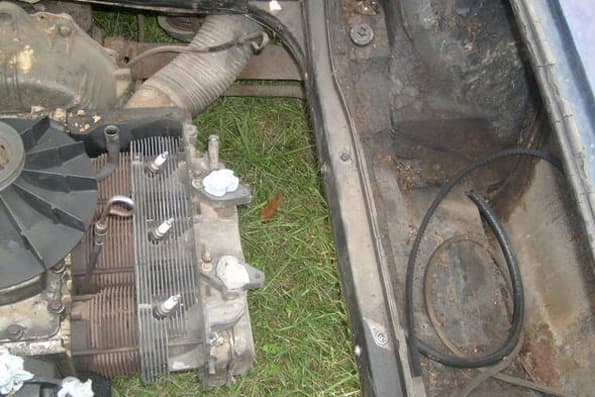
Corvair engine with no top shroud: Note the finned cylinders and spark plugs. Debris stuck betwixt fins causes overheating.
The master cause for overheating is debris bottleneck upward the cylinder fins which are vital for proper cooling. If your engine top shroud or the oil is hot to the touch after running for five-ten minutes, you might want to "de-flash" your engine. Corvair engines exercise non normally run so hot that the superlative engine shroud is too hot to bear on—warm, yes, merely not hot. The oil from the stick should not be hot either. If it pings or smokes, the passages are blocked.
- Clean the oil cooler and fan.
- Remove the top engine shroud if yous need to by removing the carbs and alternator.
- Spray compressed air in from the bottom and see what comes flying out of the fan area.
- Once you do, yous'll probably run across that you need to pull the lower shrouds to clean it properly. This is especially the case if the vehicle has been parked for a period of time. Cleaning the fins out is VERY important and like shooting fish in a barrel to do. Slow timing may too cause engine overheating every bit does running too lean in the carbs.
- Smoothen a light under the car and then that you can meet what needs to be de-flashed.
- Utilise a cheap keyhole saw from the local home depot or tool store to insert between the fins to punch out debris or excess metallic. If the exhaust manifolds are still on, they block the light from below and limit how far the bract tin go through the caput, but you can still do the job with them on.
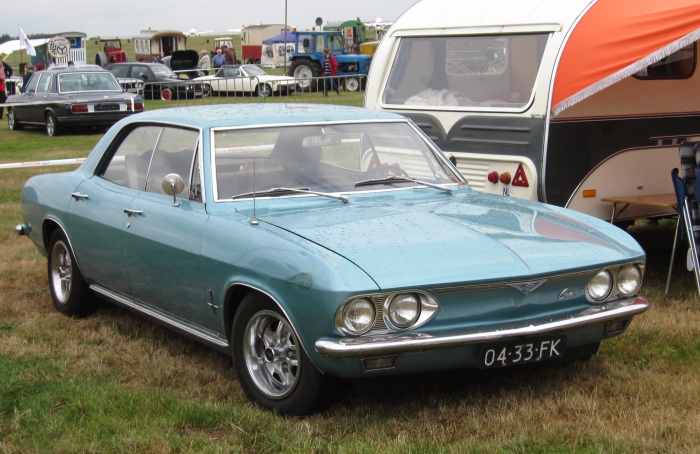
Keep an heart on your Corvair'due south transmission equally it gets older.
Charles01, CC BY-SA 3.0, Wikimedia Eatables
More than on the Chevrolet Corvair
- Corvair Heart
A forum on the Chevrolet Corvair.
- Inside the Chevrolet Corvair Carburetor
Sooner or later, the Corvair possessor volition need to make clean or maintain the 2 or four carbs on their engine. These carbs are basic compared to carbs fabricated 15-20 years later, but they still require tuning or cleaning. - HowTo Replace the Push Rod Tubes in whatsoever Chevy Corvai...
Sooner or later on, you volition accept to do this. If you don't, the oil from the block and head will drip by the old O-rings (rubber seals) which will autumn on the ground or onto the frazzle. - The Rear Engine, Air Cooled 1965-69 Chevrolet Corvair
Odds are if you are nether forty yrs, you have never even heard of a Chevy Corvair as they stopped making them in 1969. Some 20-30-somethings think they are a Japanese car.
This commodity is accurate and true to the best of the author'south knowledge. Content is for informational or entertainment purposes but and does not substitute for personal counsel or professional advice in business concern, financial, legal, or technical matters.
Source: https://axleaddict.com/auto-repair/How-to-Repair-Other-Common-Corvair-Engine-Issues
Posted by: bradleyfreadd.blogspot.com
0 Response to "How Does The Heat Work On A 1963 Corvair Youtube"
Post a Comment